
Two Soccer Shooting Drills That Train the Moment Most Coaches Skip
You can spend an entire session perfecting your build-up shape, and still lose the match in the three seconds it takes one player to get past their marker and miss the finish. That moment — alone, close to goal, a defender recovering, a split second to decide — barely gets any dedicated training time on most pitches. Teams drill shape for an hour and then finish with a few relaxed shots into an empty net, which trains almost nothing that actually happens in a match.
Real finishing chances arrive with a defender attached, a bad angle, and no time to think it over. If your shooting drills don't include all three, they're teaching technique in a vacuum. Here are two that don't.
Game 1: The Breakthrough Counter Game
Setup
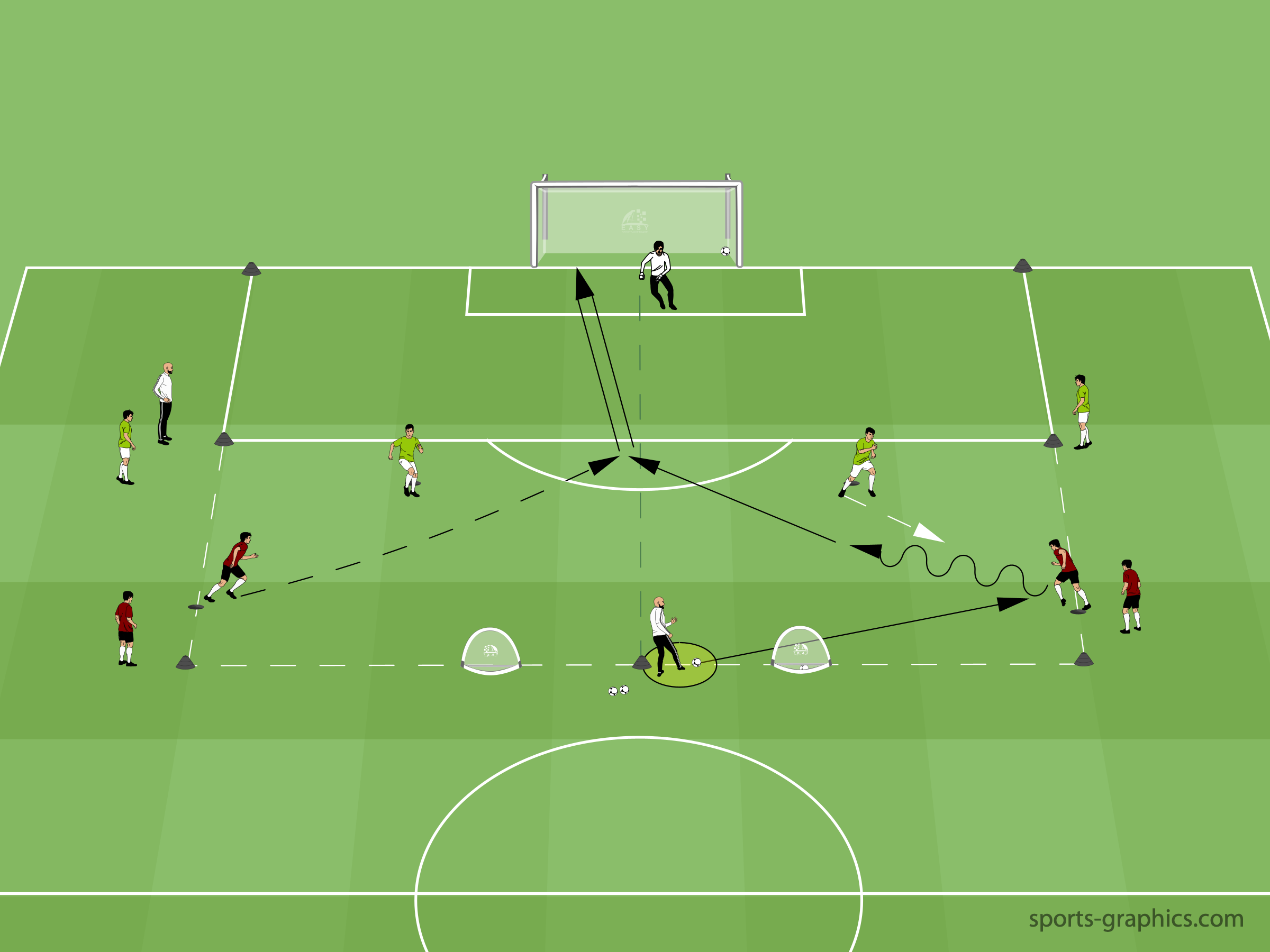
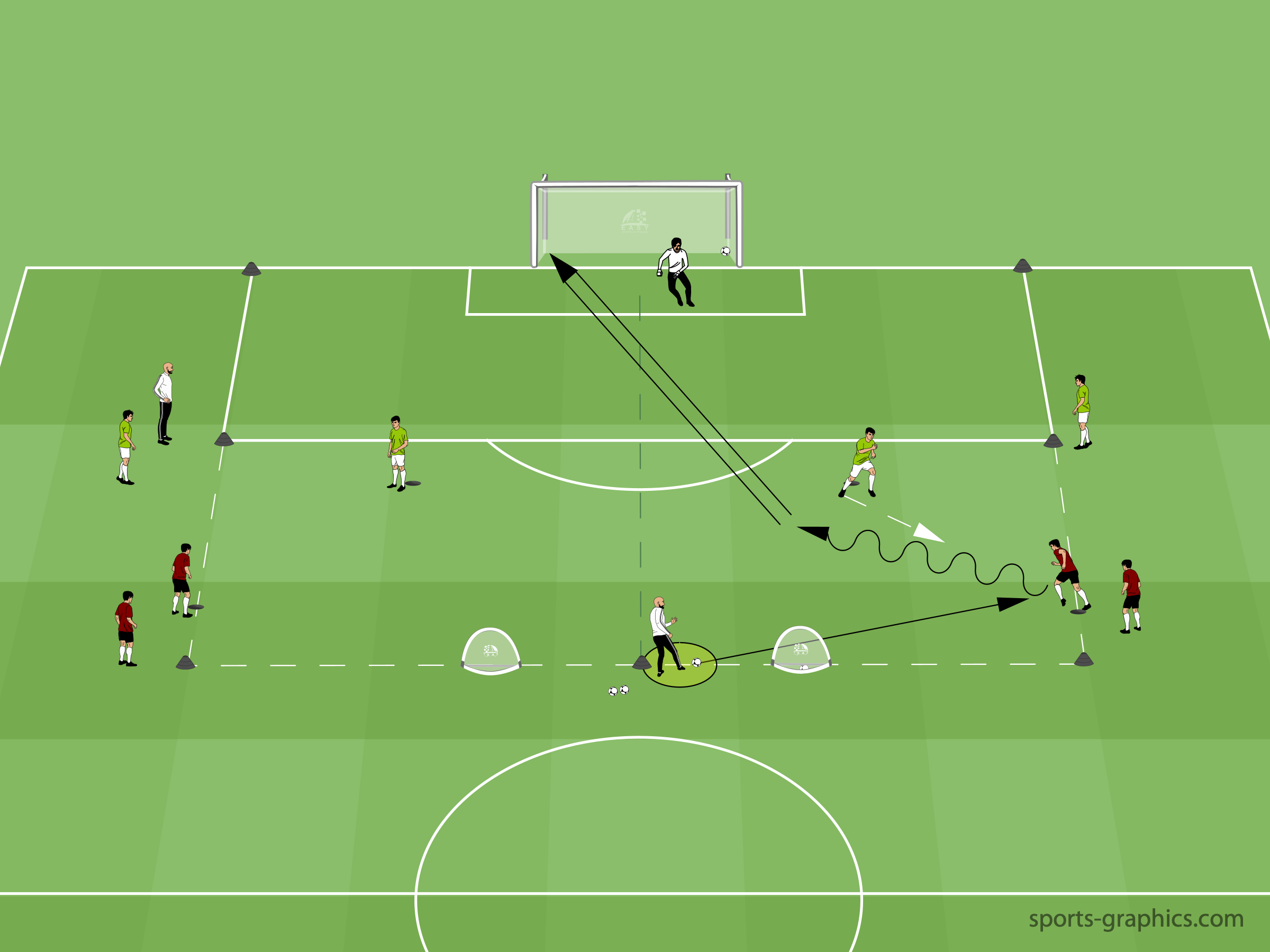
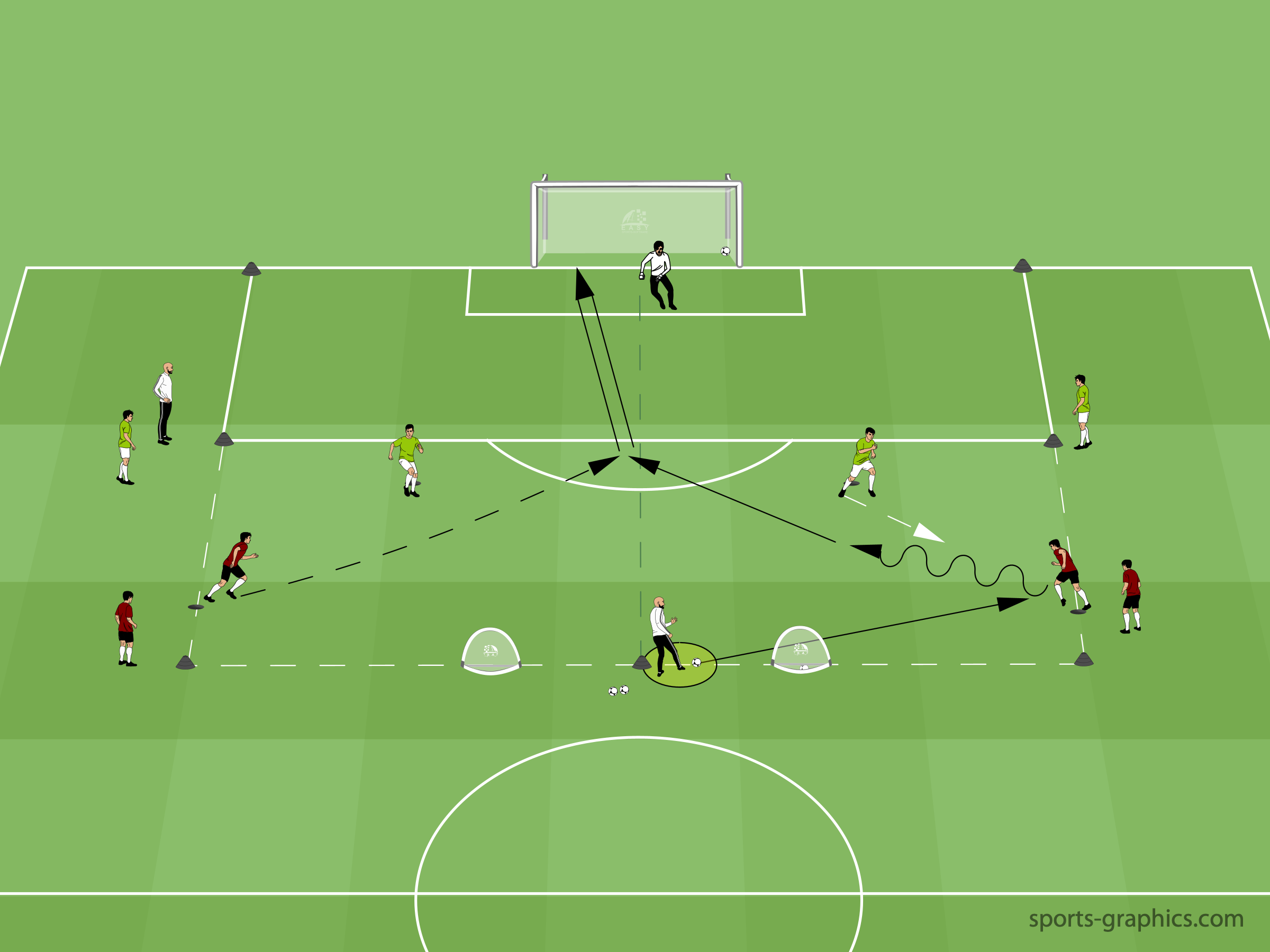
You'll need one full-size goal and one mini goal behind the attacker's starting position, and a group of up to seven or eight players so you can keep rotating through reps. One attacker faces one defender with the ball at their feet.
How it plays
The attacker tries to beat the defender one-on-one and finish on the full-size goal. If the defender wins the ball instead, they immediately counter the other way toward the mini goal — so losing possession has a real, immediate cost rather than just ending the rep. Once the pattern is running smoothly, open it up to the far side and let it become a 2v2 with both pairs now attacking the same goal, offside enforced at the edge of the box.
What to coach
Once a player actually beats their defender, the window to finish closes fast — coach them to speed up in that exact moment instead of taking an extra touch to admire the space they just created. If you've opened it to 2v2, the second attacker's run needs to be timed to arrive as the space opens, not before. And whichever way the ball goes, the reaction has to be instant — the same instinct we built with the pressing games: react to the turnover immediately, don't wait to process it first.
Game 2: The Pincer Finish
Setup
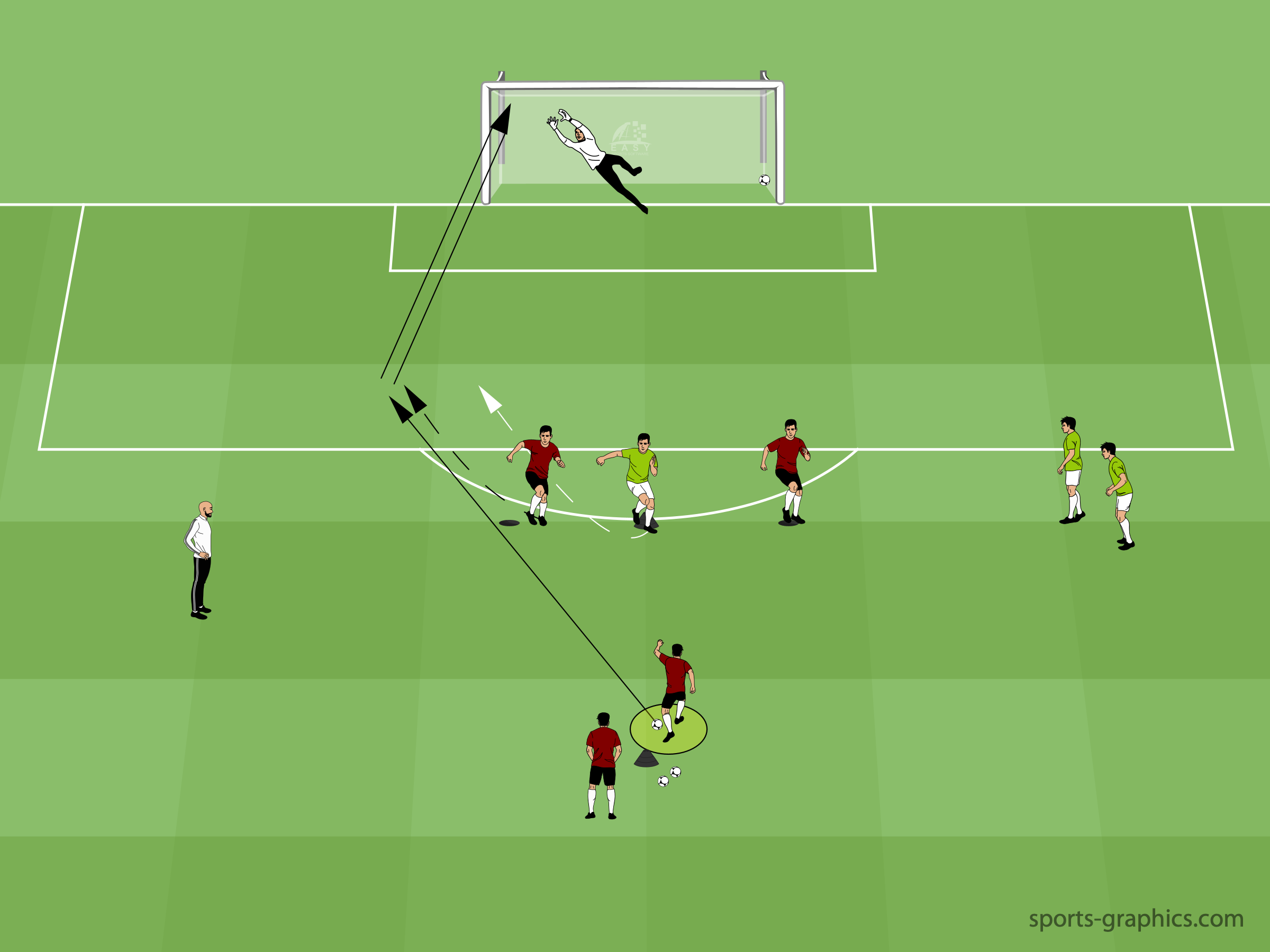
One full-size goal, and a minimum of four players: two attackers positioned on either side of a single central defender, plus a server who plays the first ball in.
How it plays
The server passes to one of the two attackers, and the moment the ball arrives, it's a live 1v1 to goal against the defender standing between them. The defender doesn't know in advance which side the ball is going to, so they're reacting from a central, neutral position every time.
What to coach
The angle here is rarely a clean one, so the coaching emphasis is on shooting early and with control rather than taking an extra touch to square it up — a good early strike from a tight angle beats a perfect one that arrives a half-second too late. For the defender, the teaching point is body position and timing: get side-on early, delay the shot rather than diving in, and react to whichever attacker actually receives the ball instead of guessing beforehand.
Why These Two Actually Change Something
Both games force a real decision at real match speed, with a defender who's genuinely trying to stop you rather than jogging alongside for show, and both keep the distances and angles honest instead of shooting from a comfortable, unrealistic spot. That combination is what separates a finishing drill that transfers from one that just looks tidy in training — the same principle behind games that actually hold up on match day rather than falling apart under real pressure.
Adjust both for your group: move the starting distance closer for younger or less confident players, add a two-touch limit once technique is solid, and keep the attacker-versus-defender matchup roughly even so neither side just gives up. If you warm up with something that already primes quick decisions — the passing pattern that turns into a 1v1 or 2v1 is a good example — these two finishing games are a natural place to send that sharpness once the main part of the session begins.
Try One in Your Next Session
Pick whichever finishing situation shows up more in your own matches — the breakaway after beating a man, or the tight-angle chance from a ball played across a defender — and build ten minutes around it this week.
If you try either of these, let us know how your players finished — and share it with a coach whose finishing drills still end in an empty net.