
The Best Soccer Practice Doesn't Need 11 Players — Just an Honest 1v1, Set Up Right
Diego Simeone once put it like this: "I relate football with boxing, with a street fight. In both cases there is always one moment, a second, in which someone shows fear in their eyes, in their body. In football it's exactly the same." Strip away the tactics board and the shape you spent all week drilling, and most matches still come down to that one second — a player and their direct opponent, deciding right there who wants it more.
That's the case for building soccer practice around small, honest duels instead of only big, structured phases of play. A 1v1 is cheap to set up, easy to repeat a dozen times in ten minutes, and scales instantly for age and ability just by moving a cone. The trick isn't the duel itself — every coach already runs 1v1s. It's what you build around it. Add a recovering defender, a support line, or a scramble for the second ball, and the same basic duel suddenly rehearses a completely different picture from a real match.
Here are three ways to do exactly that.
Scenario 1: The Recovery Line (1v2 into 2v2)
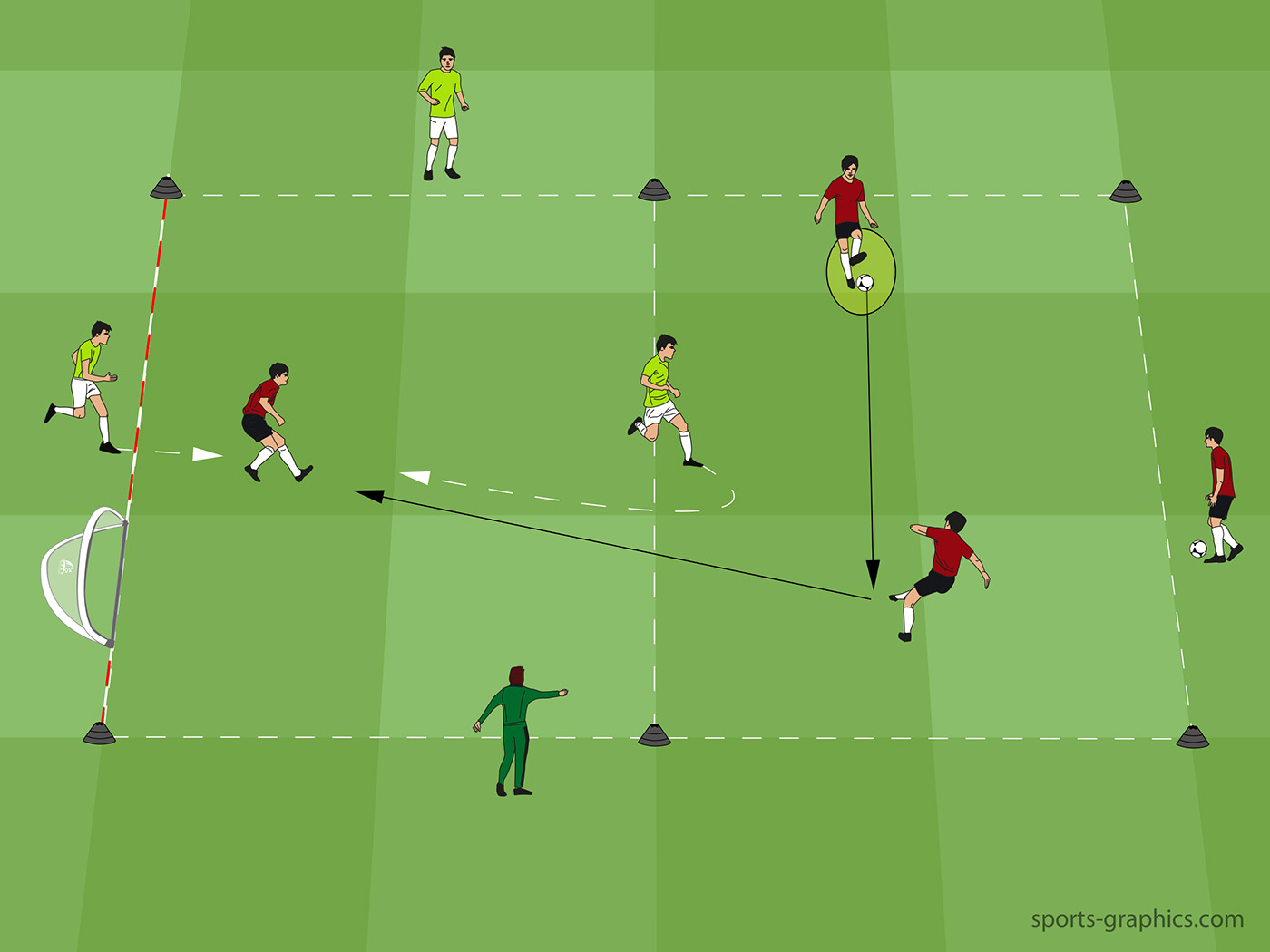
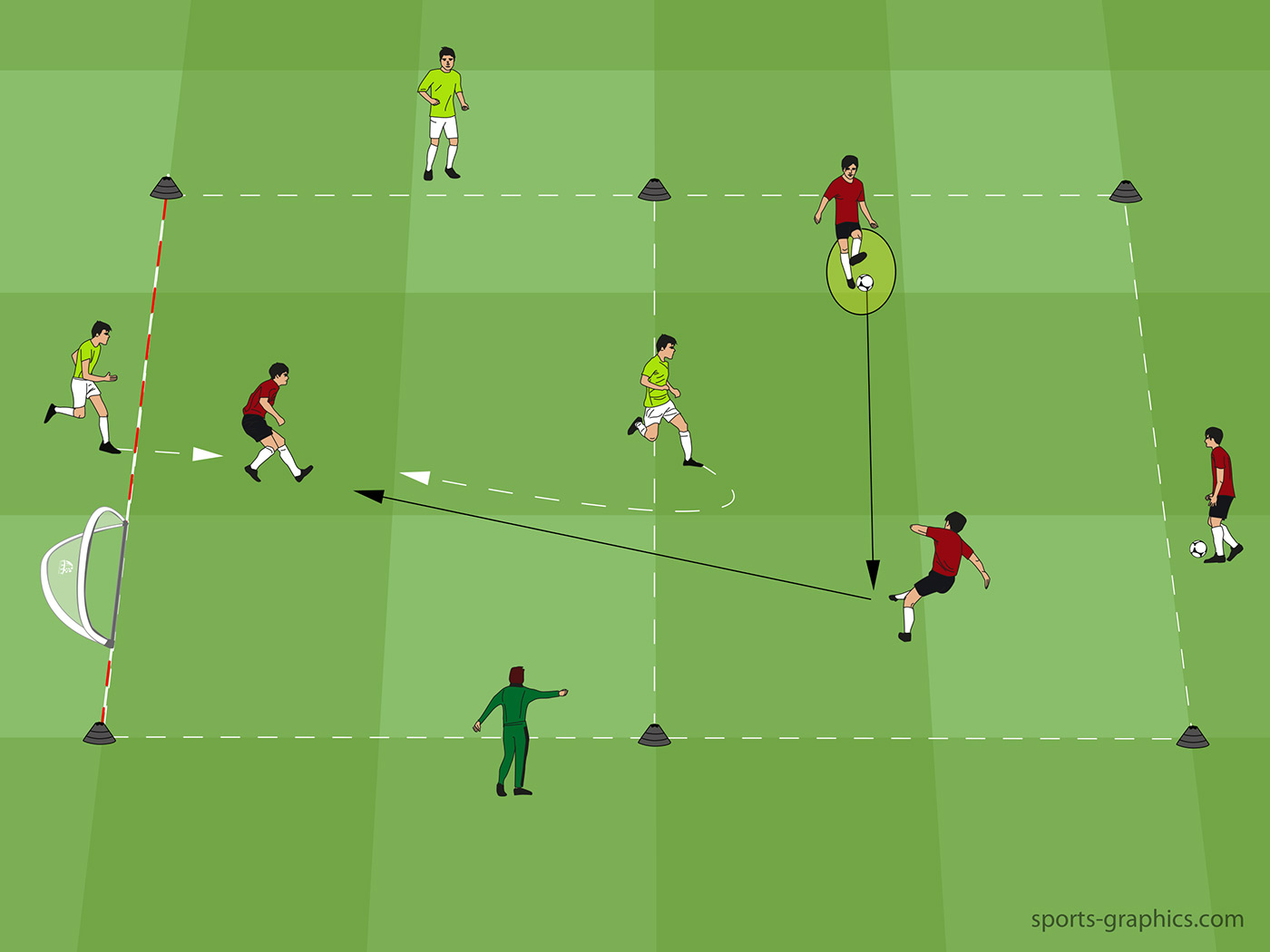
Setup
Split the field into two halves, with a mini goal and a dribble line at the far end. One attacker starts in one half. A single defender sits on the halfway line with one job: defend that line, nothing more.
How it plays
The build-up side plays the ball forward, trying to find the advanced attacker. The moment that pass connects, the picture changes instantly — a second attacker joins from behind, and a second defender arrives from the goal line, turning it into a live 2v2 racing toward the mini goal.
What to coach
The halfway defender's only real job before the pass arrives is closing the passing lane into depth — if that lane is open, the whole picture happens too easily. Once the attacker receives it and turns, that same defender has to flip mentally and prepare to sprint back into the play rather than admitting defeat on the first pass. You can vary the difficulty by allowing or forbidding the trailing attacker's late run, and by simply adjusting the depth of the field — a shorter field rewards the defense, a longer one rewards the attack.
Scenario 2: The Shifting Line (1v1 + 3)
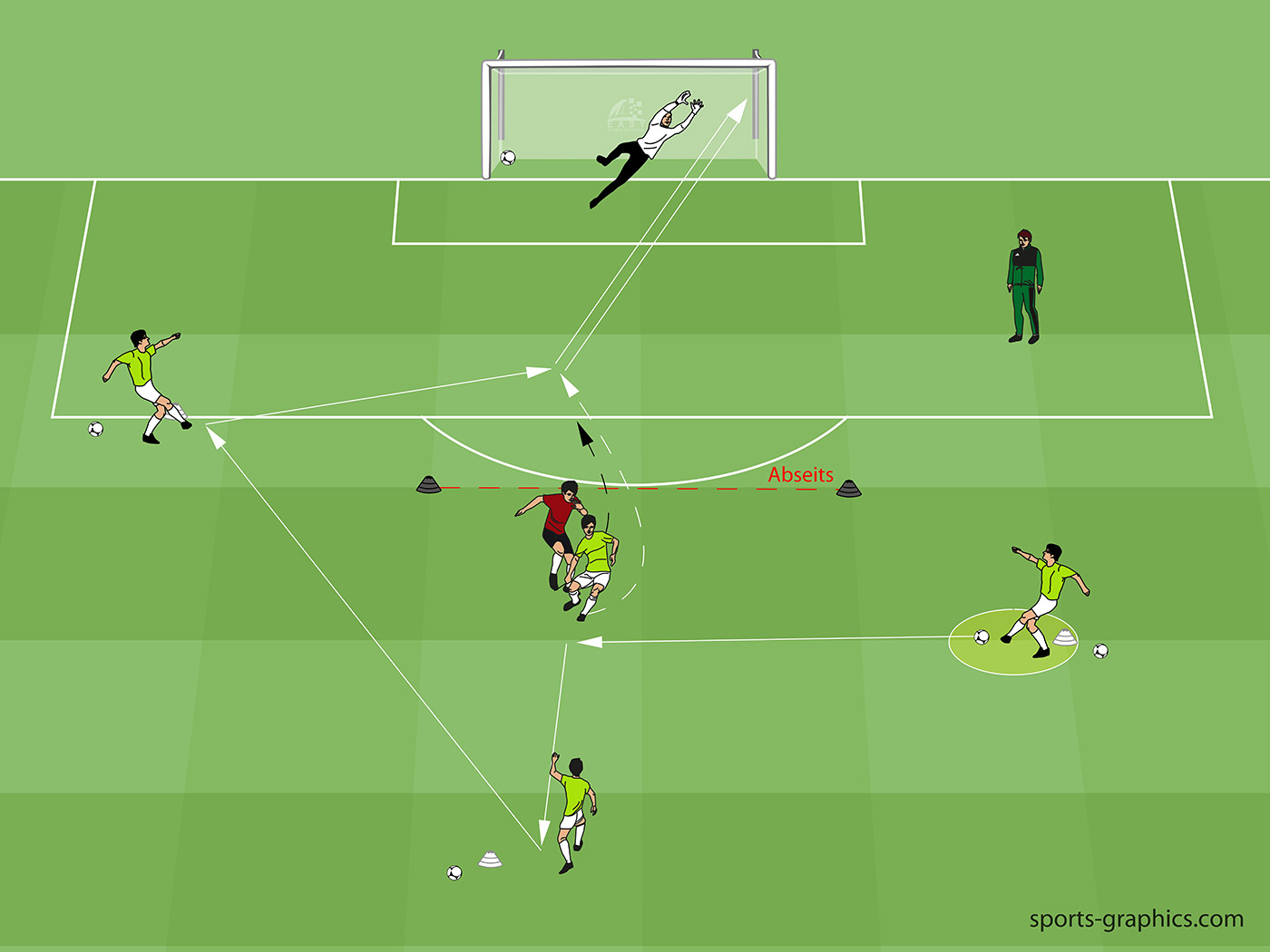
Setup
Mark a line roughly 17 metres from goal. Place three attacking target players, split so some stand in front of the line and some behind it.
How it plays
The core duel is a 1v1 played around that line — the attacker's job is to dribble or combine their way across it and finish. The three target players are limited to two touches each and can combine with one another, effectively working the ball around the edges to help the 1v1 attacker find the right moment to go.
What to coach
This one is deliberately uncomfortable for the defender, closer to defending near the edge of an offside line than a clean isolated duel — they constantly have to decide between stepping to press the ball and holding position to block the pass across the line, and getting that balance wrong either way gets punished immediately. That back-and-forth is exactly the skill worth repeating here.
Scenario 3: The Box Duel (1v1 + 1)
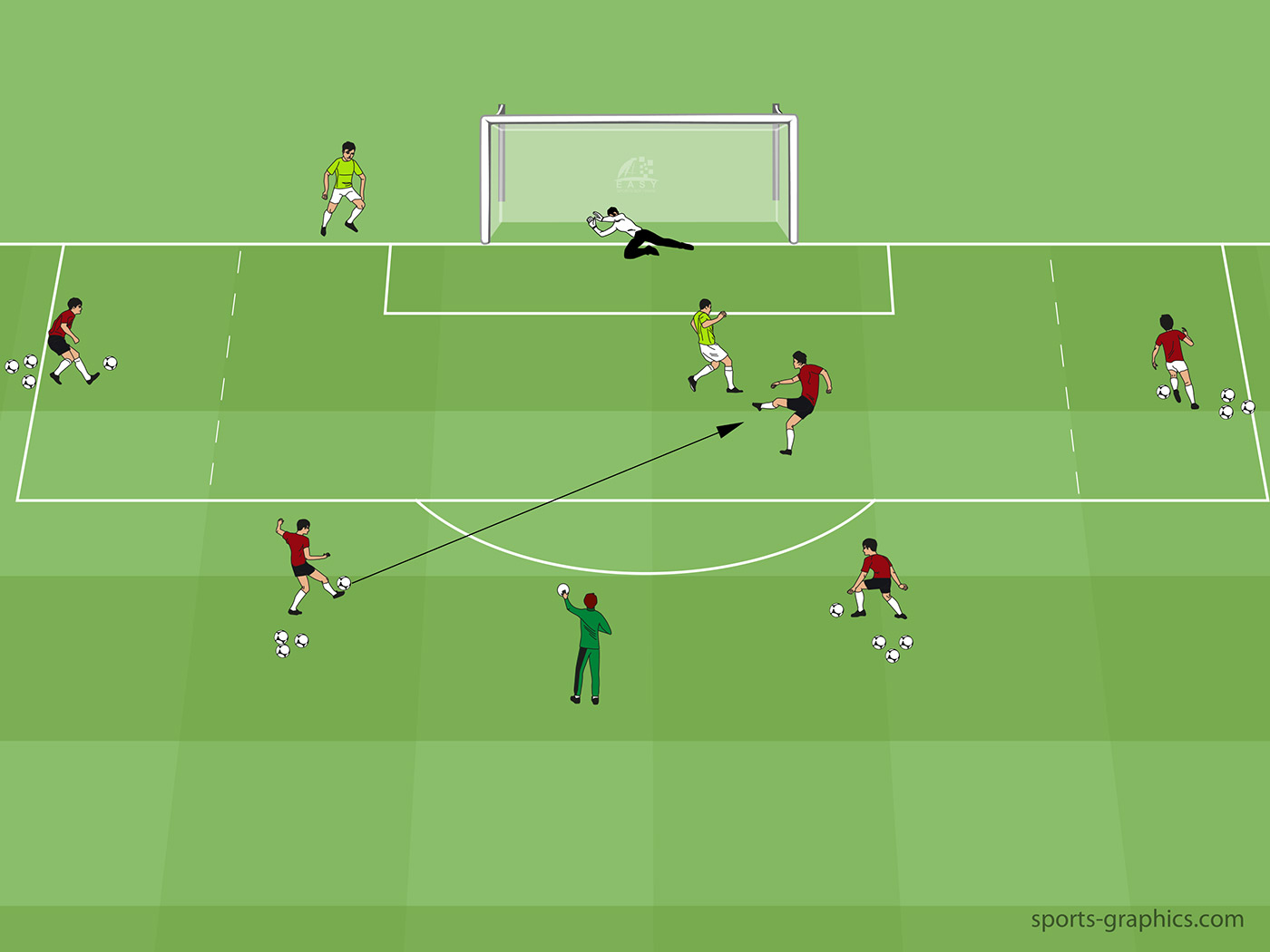
Setup
Use the penalty box. One attacker and one defender go head-to-head inside it, while four servers stand outside the box with balls ready to go.
How it plays
The attacker calls for a ball from any of the four servers and has to finish under direct pressure from the defender, against a full-size goal with a keeper. Run it as a running competition — most goals in a set number of reps, or first to a target score — to keep the intensity and the stakes real.
What to coach
Demand full physical commitment from the defender here; this is not the moment to let intensity drop. The moment a shot is blocked, it should be dead and replayed with a fresh ball rather than scrambled over, which keeps the reps clean and fast. It's also worth coaching the defender to work with their keeper rather than around them — screening part of the goal so the keeper effectively has less net to cover is a real skill, not just a bonus. One clean rule keeps it honest too: no nutmegs allowed, so attackers have to actually beat their opponent rather than look for the cheapest way through.
Why Small Duels Teach Big Lessons
None of these three scenarios needs more than six players or a complicated setup, and that's exactly why they're worth returning to often. Each one takes the same simple 1v1 and dresses it in a different piece of match context — a recovering defender, a line to defend, a goalkeeper to work with — so the "moment of truth" Simeone described gets rehearsed from three different angles instead of just one. If you're already running small-sided games that transfer to match day or finishing games built around real pressure, these three scenarios slot in naturally as the more isolated, repeatable version of the same idea — more reps of the exact moment that actually decides matches.
Try One in Your Next Session
Pick whichever picture matches a gap you've seen in real matches — a defender who doesn't recover, an attacker who dribbles into trouble instead of combining, a striker who hesitates in the box — and build ten minutes of honest 1v1s around it this week.
If you try any of these, let us know how your players responded — and pass it along to a coach who still thinks 1v1 practice means standing in a line waiting for a turn.