
Only Four Players Showed Up? That's Exactly When the Best Soccer Coaches Do Their Best Work
You know the message before you even open it: two out injured, one at a family thing, half the midfield down with whatever's going around. Four or five players standing on the pitch, looking at you for a plan. Most coaches treat this as a wasted session — a loose kickabout, some passing patterns, everybody home early.
That reaction gets it backwards. Johan Cruyff had a phrase for exactly this situation: "Every disadvantage has its advantage." A small group is a problem if you're trying to run a full-sided game. It's actually an opportunity if what you want is to isolate one exact game principle and drill it far harder than sixteen players spread across a big pitch would ever let you. Fewer bodies means every rep is deliberate, every player touches the ball constantly, and you can shape the picture precisely instead of hoping it emerges out of a bigger, messier game.
Here are two ways to do exactly that with next to nobody on the grass.
Game 1: The Blind-Side Turn (2+1 v 1)
Setup
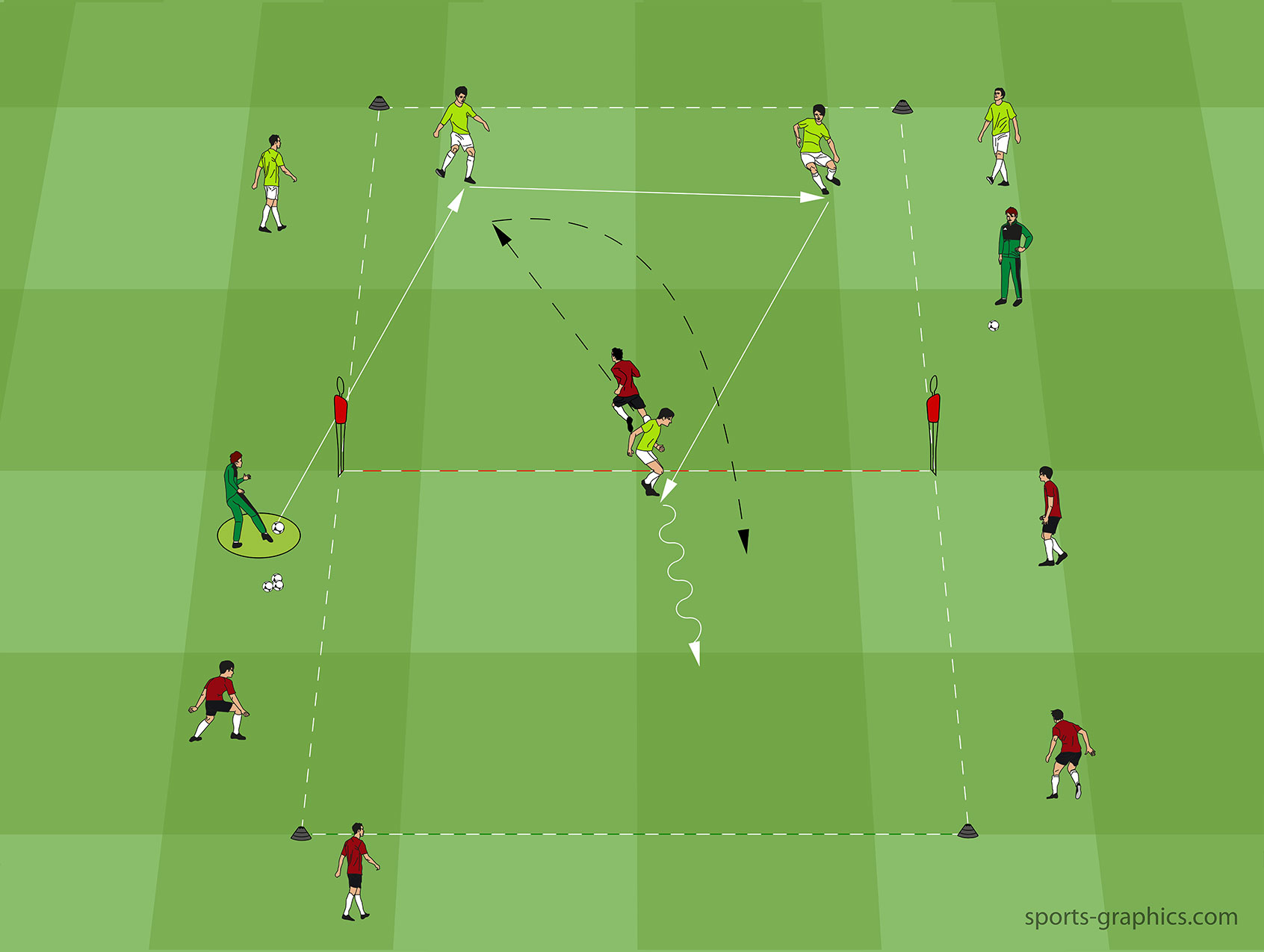
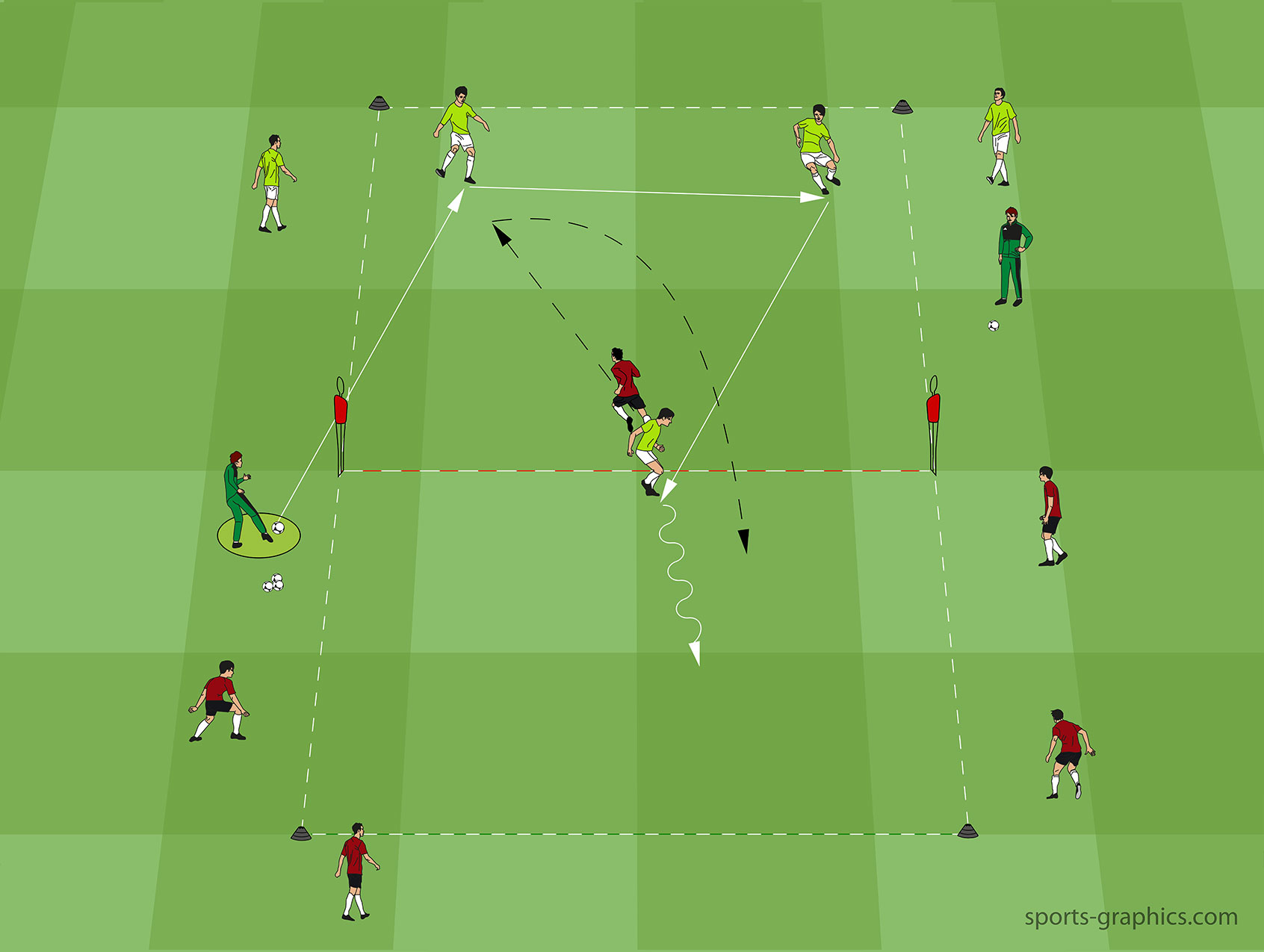
Split the field into two halves. You need just four players: two attackers positioned in the far half, one defender, and one more attacker starting alongside the defender on the halfway line.
How it plays
You (the coach) play the ball into the two advanced attackers to start the phase. The moment that happens, the defender and the trailing attacker both set off from the halfway line, chasing into the action. One of the advanced attackers takes the ball on the line with an open first touch, then has to turn and take on the defender who's now arriving from behind — exactly the picture of receiving with a covering defender in front and a recovering one closing from deep.
What to coach
Field size is your dial for difficulty — make it bigger if the attackers need an easier look, smaller if you want the defender's recovery run to actually matter. The defending side's real job happens before any of this: reading the risk of that first pass into depth and cutting it off rather than reacting once it's already in. If you're only coaching one thing here, coach that — denying the ball in behind is a far better outcome than winning a foot race to stop it after the fact.
Game 2: Play Out, Then Defend the Break
Setup
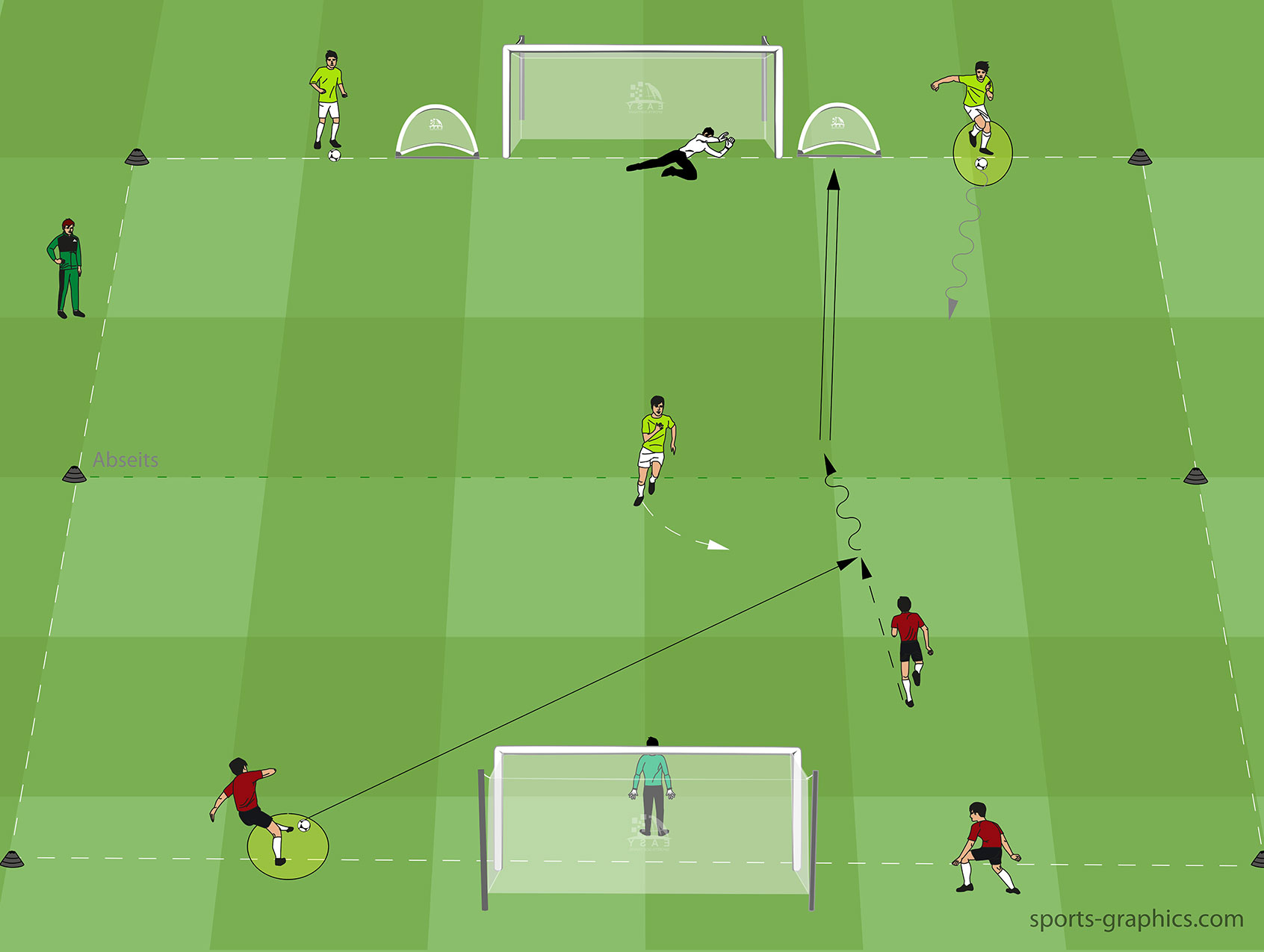
Mark a field roughly double the size of a penalty box, with a full-size goal and keeper at one end plus two mini goals set up beside it. You need just two outfield players: a center-back positioned centrally, and a pressing defender starting on the halfway line.
How it plays
The center-back receives a pass under immediate pressure and has to find one of the two mini goals — with the goalkeeper actively defending them too, so it's a genuine contest, not a free pass. The instant that action finishes, the picture flips without warning: a 2v1 counter-attack breaks out in the opposite direction, and the same center-back who was just playing out now has to defend alone against two attackers.
What to coach
On the buildup side, push the center-back to move the ball courageously on the first touch rather than taking an extra one to feel safe, and demand passes that are flat and firm instead of soft or floated. On the defensive transition, the coaching focus shifts entirely: cut off the easy ball across between the two attackers first, and use the goalkeeper as an active extra defender rather than trying to solve the 2v1 alone. That's a realistic rehearsal of exactly what a center-back has to do the instant a team loses the ball in buildup — recover the picture immediately, not after a few panicked steps.
Why Small Groups Actually Train More
Both games isolate one specific, high-value moment — turning under pressure with a recovering defender behind you, or a center-back who has to build and then instantly defend — and repeat it relentlessly instead of hoping it shows up naturally inside a bigger game. That's the real case for game-realistic 1v1 scenarios: with fewer players, you're not settling for less football. You're choosing exactly which moment gets rehearsed, and how often.
Next time the attendance list looks thin, resist the urge to write the session off. Pick the one game principle your team actually needs — closing the passing lane into depth, or defending a transition alone — and build the next twenty minutes entirely around it.
If you try either of these with a small group, let us know how it went — and share it with a coach who's still cancelling sessions because "not enough players showed up."