
High Pressing Isn't a Fitness Problem — It's a Reaction Problem (2 Games to Fix It)
Every coach has said some version of this after a bad performance: "We just didn't press hard enough." It's usually the wrong diagnosis. Watch the film back and the effort is almost always there — players are running, players are trying. What's missing is timing. By the time the second and third players react to a turnover, the moment that made pressing dangerous for the opponent is already gone.
High pressing doesn't fail because players are unfit or unwilling. It fails because reacting together, in the first second after losing the ball, is genuinely hard — and it's a skill almost nobody trains directly. Running laps doesn't teach it. Neither does a walkthrough on the tactics board. What does is putting players in small, repeatable situations where losing the ball instantly demands a fast, coordinated reaction — over and over, until it stops being a conscious decision and starts being a reflex.
Here are two small-sided games built for exactly that.
Game 1: The Rondo That Bites Back
This one starts as a possession game and turns into a race the instant the ball changes hands — which is precisely what makes it useful.
Setup
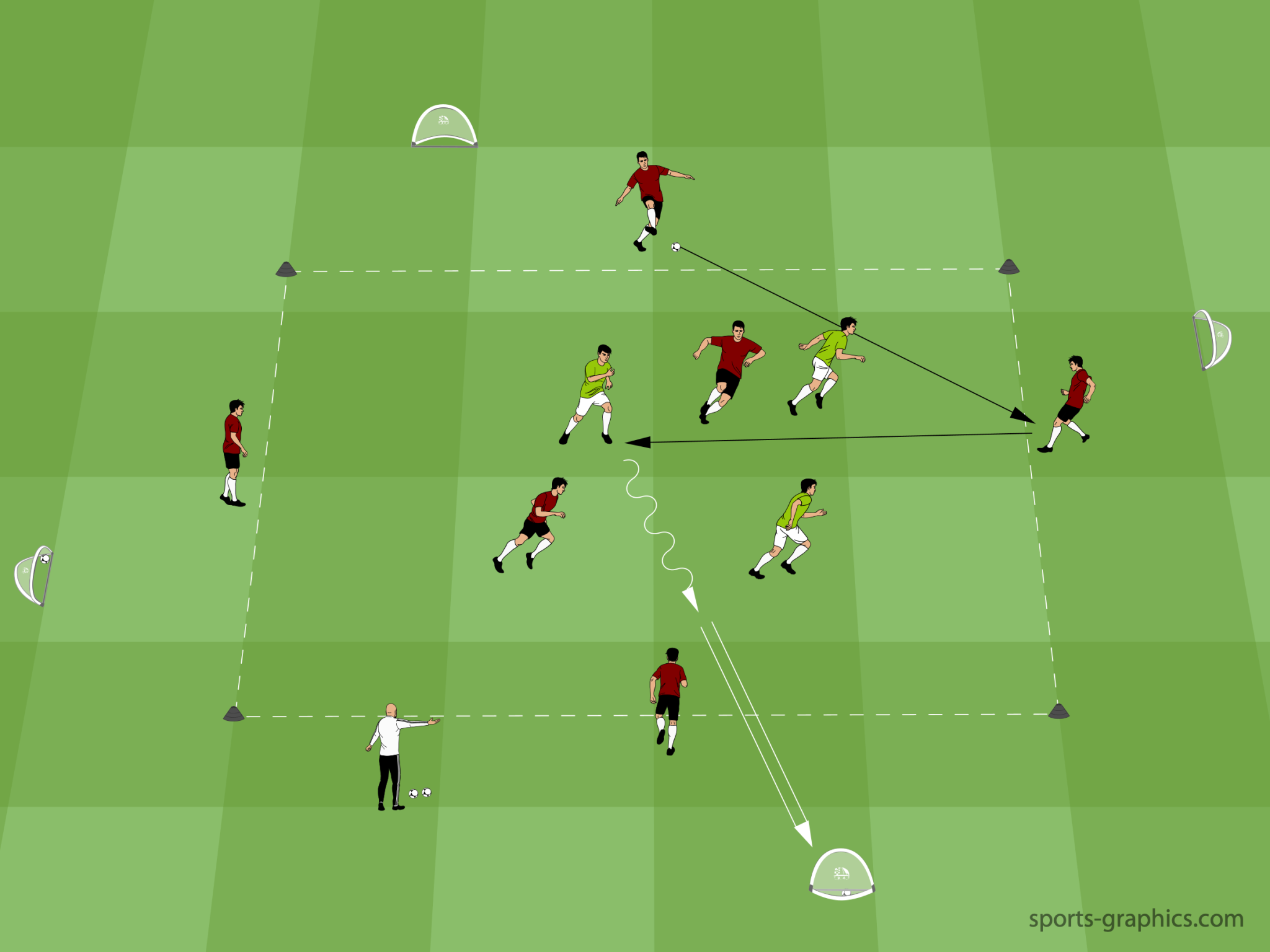
Mark out a grid around 20x20 metres. Four players stand on the perimeter lines acting as support (limited to one or two touches). Two more players work inside the grid, combining with the perimeter players to keep possession — so in effect it's six attackers against three defenders squeezed into the middle. Place two mini goals inside the grid, on opposite sides, close enough that either the inside attackers or the nearest perimeter players can realistically defend them.
How it plays
The six keep the ball away from the three defenders, rondo-style. Nothing about that part is unusual. The moment the defenders actually win it, though, everything flips without a whistle or a reset: the three defenders become attackers and go straight at the two mini goals, while the players who just had the ball have to organize a defense on the move, at speed, with zero warning.
What to coach
Watch for the gap between losing the ball and reacting to it — that gap is the entire point of the drill, and your job is to shrink it. The players nearest the ball when it's lost need to sprint into a recovery position immediately, not after they've mentally registered what happened. The two mini goals mean there's always a decision to make about which one to prioritize, so cue players to communicate out loud rather than guess. Rotate the three defenders every few minutes so fresh legs keep the pressing speed honest — a tired defender pressing at three-quarter pace teaches players the wrong habit.
Game 2: The 30-Second Switch Press
If the first game trains the reaction, this one trains it under fatigue — which is where pressing habits actually get tested in a match.
Setup
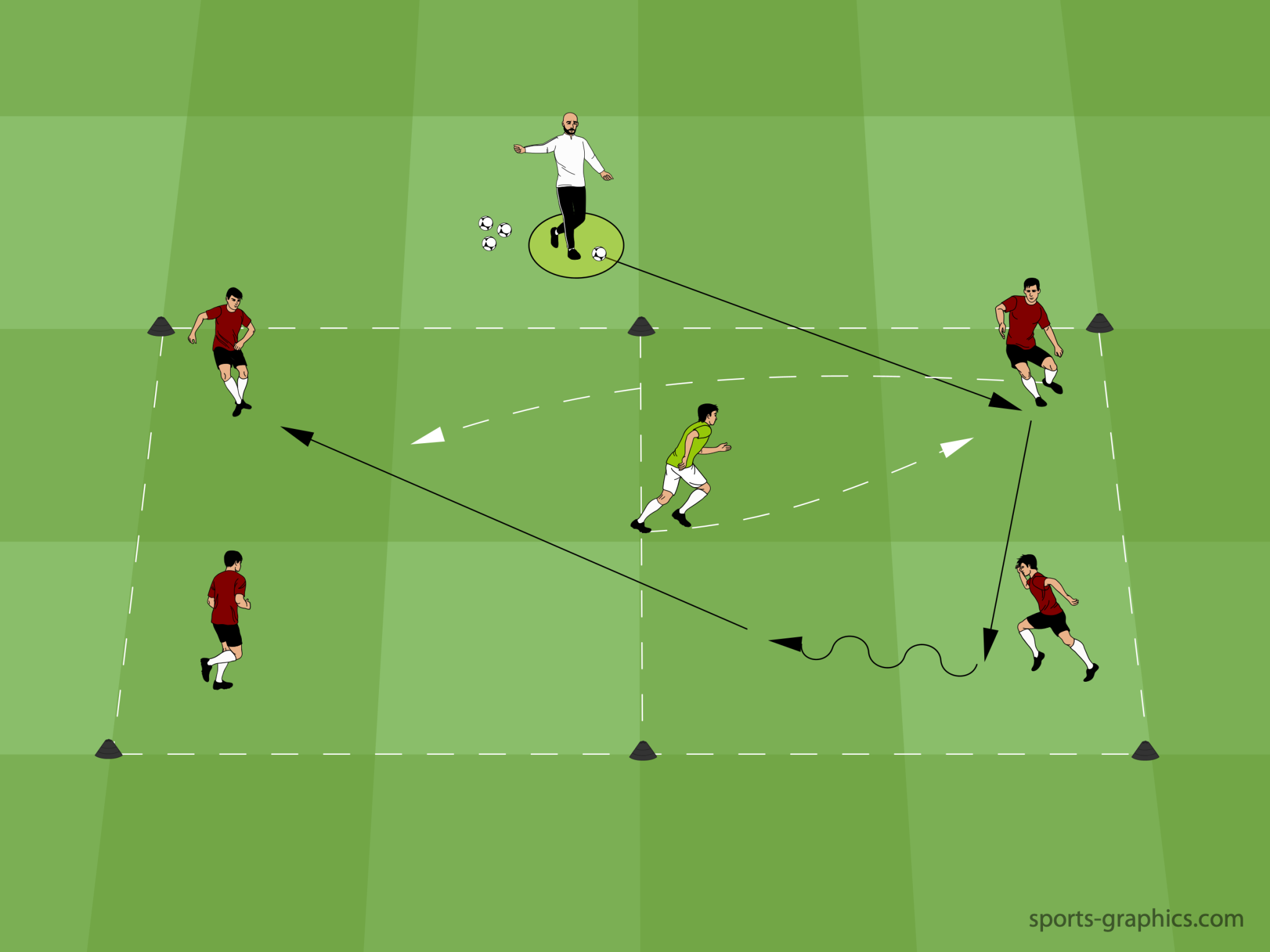
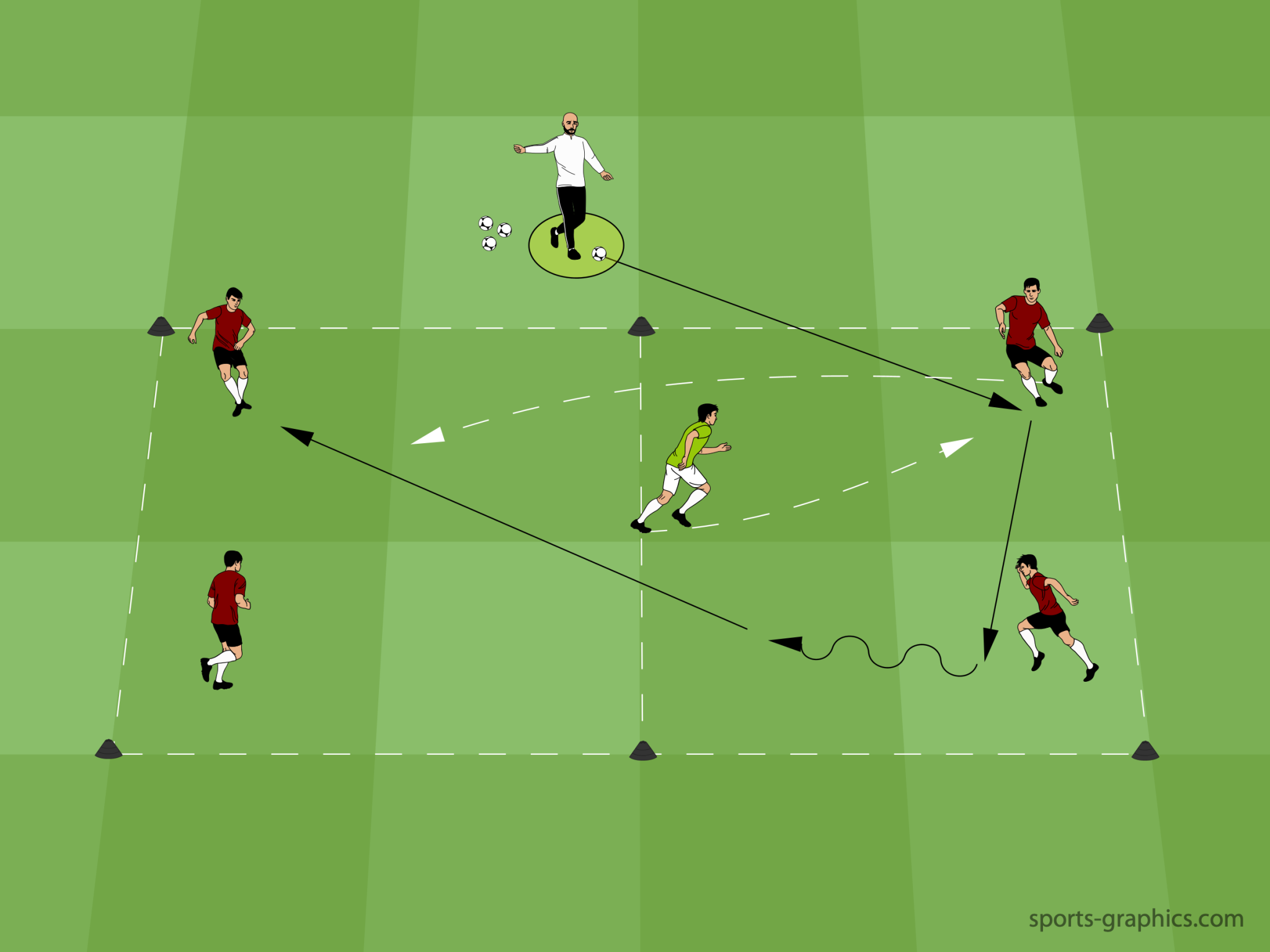
Split a rectangle roughly 20x15 metres into two halves with a middle channel. Two players stand in each half. One extra player — the free defender — starts on the middle line, able to press into either half.
How it plays
The side in possession works the ball between their two players, strictly two touches each, looking to switch play across to the other half. The free defender's job is to prevent that switch. If the switch happens cleanly, the player on the original side who didn't play the pass has to immediately sprint across and press the new ball carrier — no delay. If the free defender wins the ball before a switch happens, whoever gave it away presses instantly. Every round runs for 30 seconds flat, win or lose, then a fresh player takes over the middle.
What to coach
The two-touch limit forces players to scan and decide before the ball arrives, which is the habit you actually want under match pressure. The pressing player should be coached to close down at an angle that cuts off the pass back rather than sprinting straight at the ball — angle beats speed here. And don't let dribblers play it safe: encourage the player under pressure to actually attack the presser one-on-one when the switch isn't on, since a hesitant dribbler under a well-timed press is exactly the turnover this game is designed to punish. The 30-second cap is deliberate — it's short enough to demand full intensity every single round, which is where most teams' pressing quietly falls apart once they're tired.
Running Both Games in the Same Session
These two work well back to back. Start with the rondo — it's the lower-intensity introduction to the core idea (react instantly, organize while moving) and gives you a clean picture of who's reacting on instinct and who's still thinking it through. Once that habit is visible, move into the 30-second switch game, where the two-touch limit and short round length push the same reaction under real fatigue. If your players already warm up with something that primes quick decisions — a passing pattern that turns into a 1v1 or 2v1, for example — this pair of games is a natural next step once bodies and minds are switched on.
The Real Takeaway
You can't install a pressing trigger by drawing arrows on a whiteboard. It lives in the body, not in an instruction, which means it only shows up once players have felt it enough times to stop thinking about it. Give your players enough reps of reacting together in that first second after a turnover, and the cues you're always shouting from the touchline start showing up on their own — because by then, they've already done it a hundred times in training.
If you run either of these with your team, let us know how it goes — and pass it along to a coach who's still trying to fix pressing with a lecture instead of a rep count.