
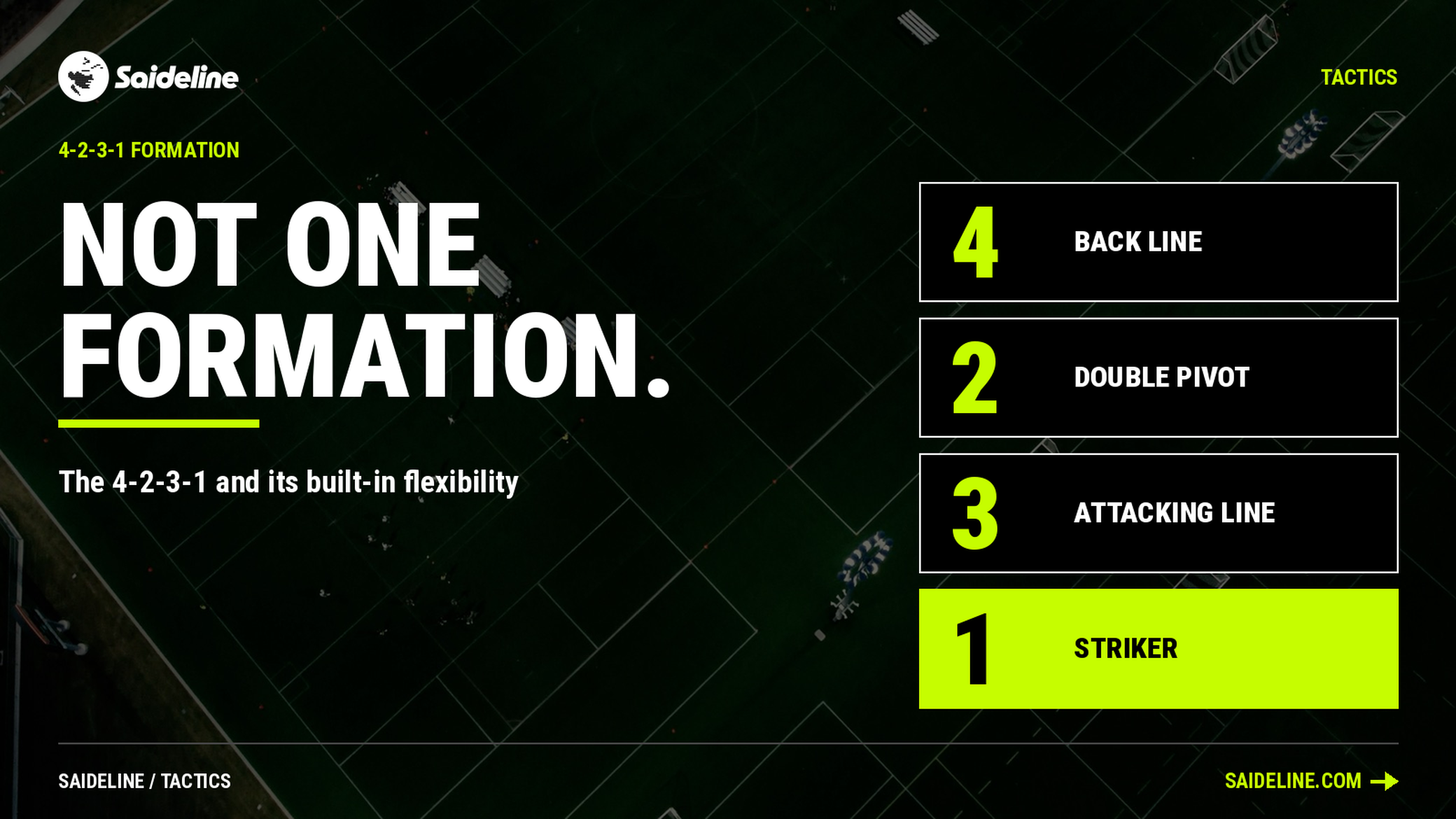
Ask five coaches to draw a 4-2-3-1 and you'll get five different teams. Not because anyone's wrong — because the formation was never meant to describe eleven fixed dots on a whiteboard. It describes a set of relationships that keep reorganizing themselves depending on what the opponent does and what the moment demands.
What the Shape Actually Gives You
Strip away the jargon and the 4-2-3-1 is four defenders, two players sitting in front of them, three more just ahead of that pair, and a single striker. What makes it worth coaching isn't the numbers — it's the double pivot. Two central players who can split defensive duties and passing responsibility means the back four rarely has to solve buildup problems alone, and the front four get a platform to attack from instead of a starting position to defend from.
It's Rarely Just One Formation
The moment the ball starts moving, the 4-2-3-1 tends to stop looking like a 4-2-3-1. Barcelona under Xavi are a clear real-world example: when the opposition presses with two strikers, his team stays in a 4-3-3; when the opponent presses with a front three instead, Barcelona shift into a 4-2-3-1 specifically to create the extra body in the double pivot that the wider press demands.
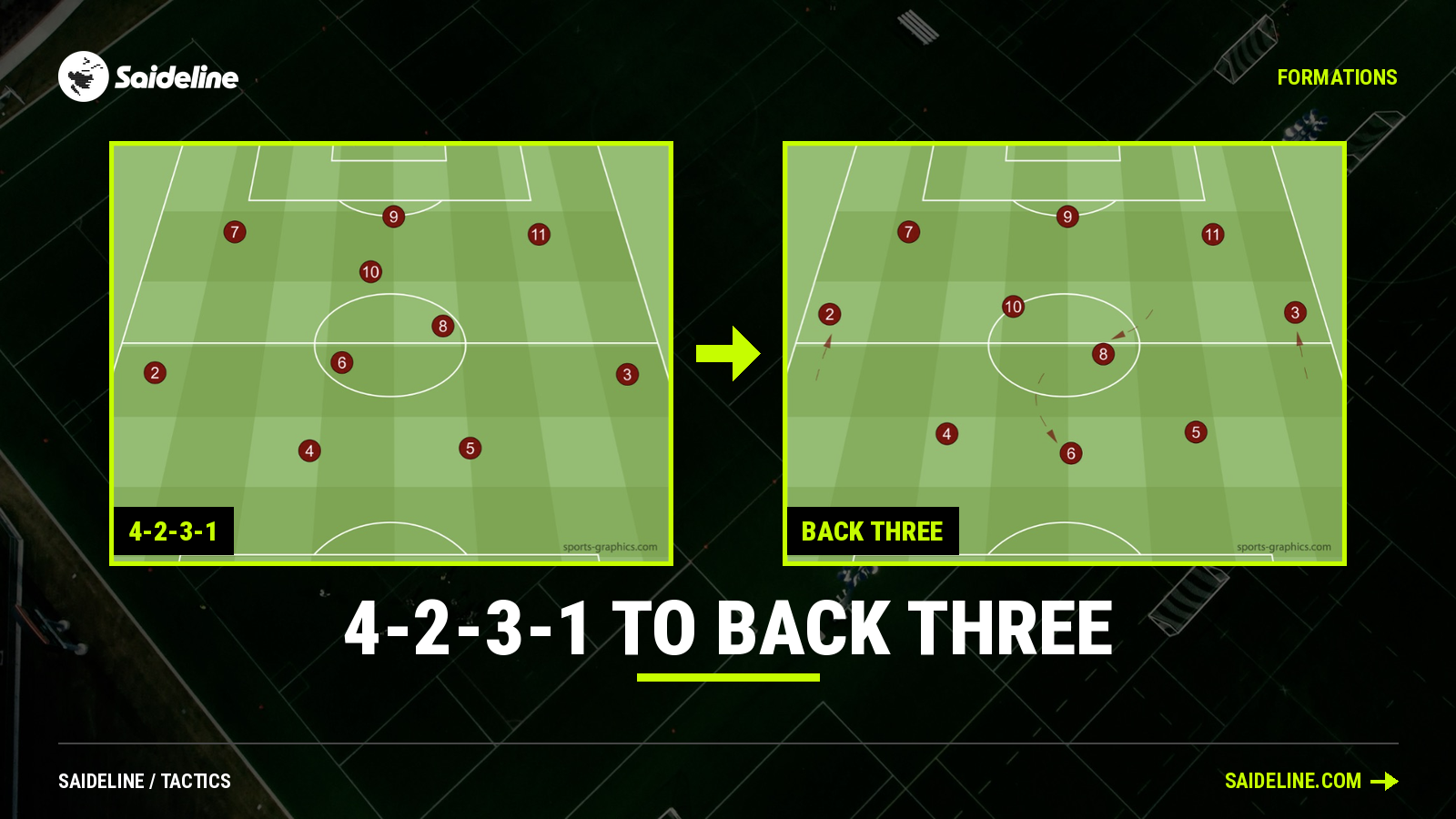
That same flexibility shows up from the back, too. A common pattern is one of the two pivot players dropping between or beside the center backs during buildup — instantly turning a back four into a back three without a single substitution. Coaches sometimes call this "the six tucking in." The formation on paper never changes; the team you're actually looking at does.
What Each Role Actually Demands
The mistake most coaches make with formations is treating position names as job descriptions. "Center back" tells you almost nothing on its own — what a center back needs depends entirely on what you're asking the team to do around them.
A center back in a team built around aggressive counter-pressing needs something close to the opposite skill set of a center back in a team built on patient possession: quick recovery speed and comfort defending in transition versus a calm first touch and the range to switch play under no pressure at all. Same position, same formation label, completely different player.
This is worth thinking through position by position before you ever run a session — not "what does a winger do," but "what does my winger need to be good at, given how I actually want this team to attack."
A Concrete Picture: Building Out Against Two Strikers
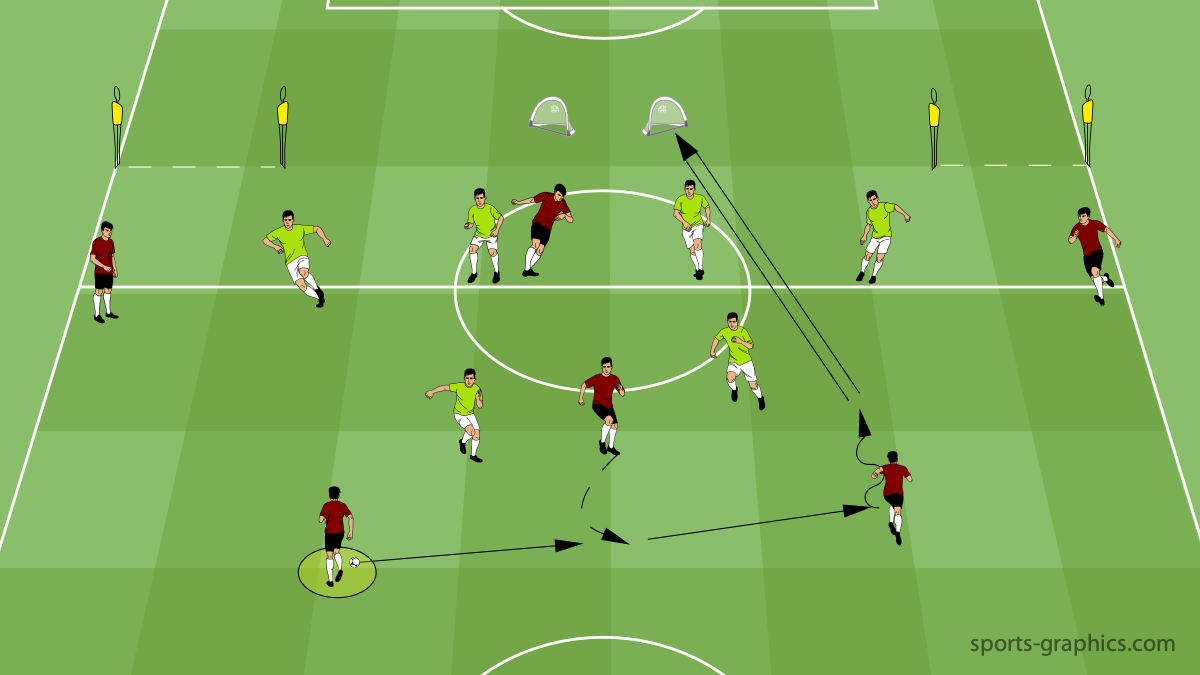
Here's how that plays out on the grass. Set up a possession game where the attacking team is deliberately missing its front players — mark their positions with mini-goals or cones instead. The two strikers can only be found with a vertical pass into the marked zone; anything into the wide advanced positions has to travel through a realistic passing angle, not a free ball dropped into space.
The coaching value isn't the drill itself, it's what it isolates: the double pivot and back four have to manufacture the pass into the front line themselves, under something close to real pressure, instead of relying on an attacker to simply be open. Widen it further by rewarding long diagonal switches to the wide players with an uncontested finish, and you're training the exact buildup patterns the 4-2-3-1 is actually built to produce.
Where to Start
Don't start by drilling the shape. Start by deciding what you want each phase of it to do — how you want to build out, how you want to press, what happens when the ball is lost — and let the 4-2-3-1's flexibility work for you instead of forcing your team into it as a fixed picture.