
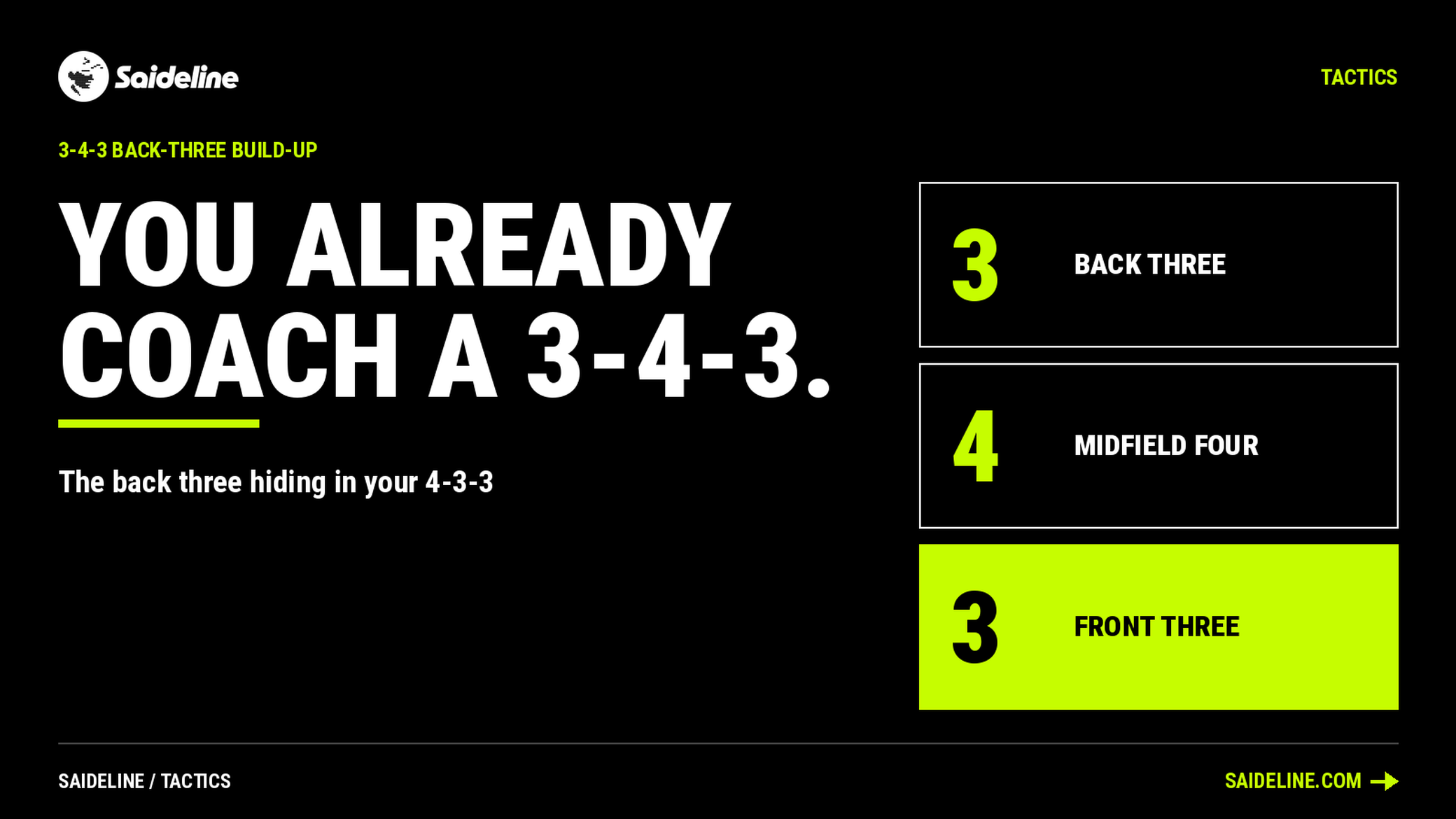
Plenty of teams play a 3-4-3 without ever calling it that. They warm up in a 4-3-3, kick off in a 4-3-3, and defend in a 4-3-3 — but the moment they have the ball and start building out, one midfielder disappears from the middle and reappears in the back line. What's left on the pitch is a back three, a bank of four, and three forwards. A 3-4-3, in everything but name.
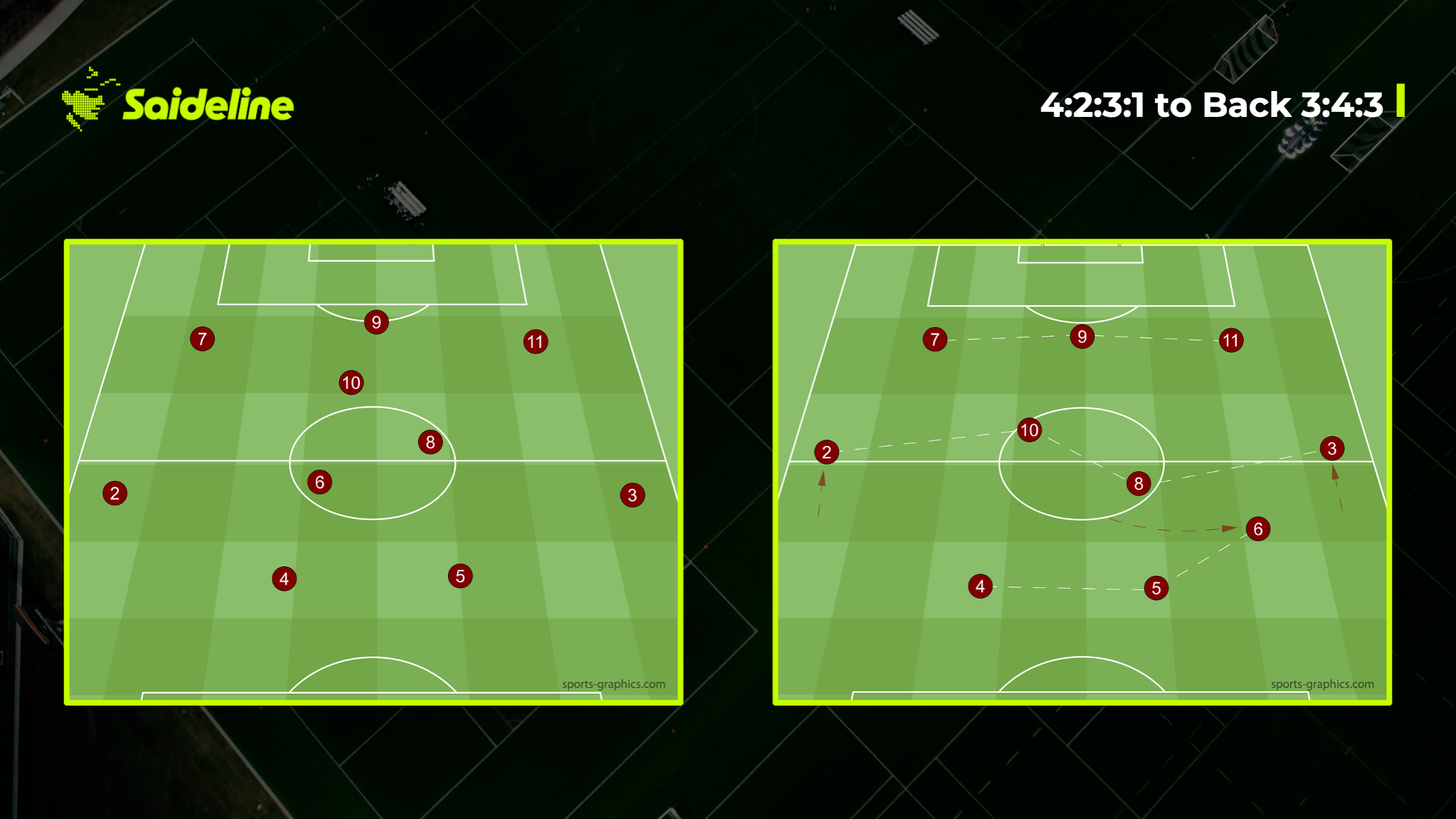
How a 4-3-3 Turns Into a 3-4-3
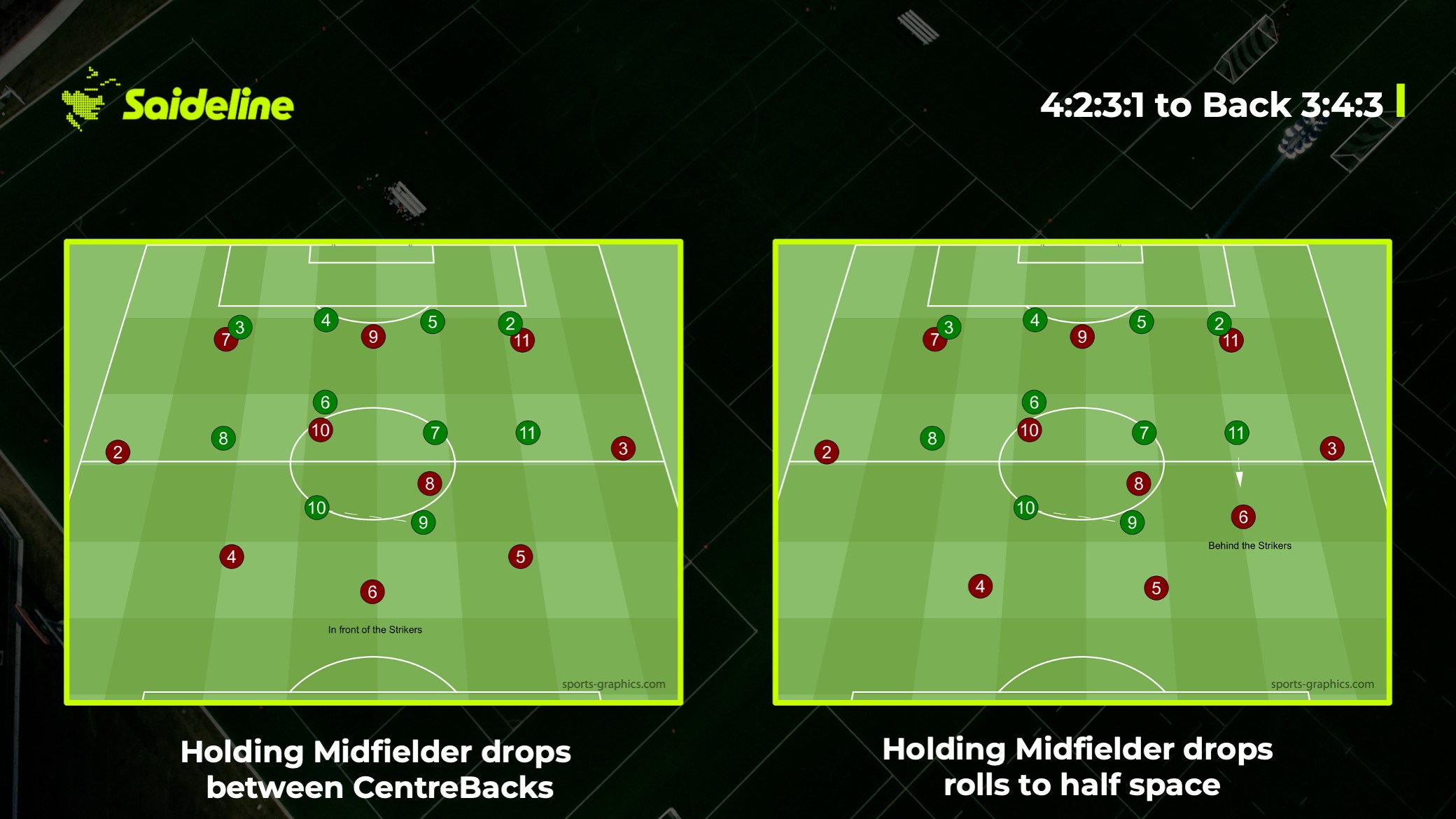
The mechanism is simple enough to coach in a single session: your holding midfielder drops into the back line, either splitting the two center backs or tucking in beside one of them. Either way, the team now has three at the back instead of two, which frees both fullbacks to push high and turns the shape into something that looks and plays like a 3-4-3.
There are two ways to make that drop, and they solve different problems. Dropping between the center backs keeps the spacing symmetrical and easy to read, but it also puts your holding midfielder close enough to the opposition's front line that a well-organized press can still reach him. Tucking in beside one center back instead — on the ball-near or ball-far side — makes him harder to press cleanly, especially against a team playing with only one advanced striker, but it asks more of the two remaining central defenders to cover the width themselves.
Neither version is "correct." Which one you use depends on how the opponent presses, and a team that can do both without missing a beat is far harder to press out of possession than one that only knows the textbook version.
The Alaba Solution
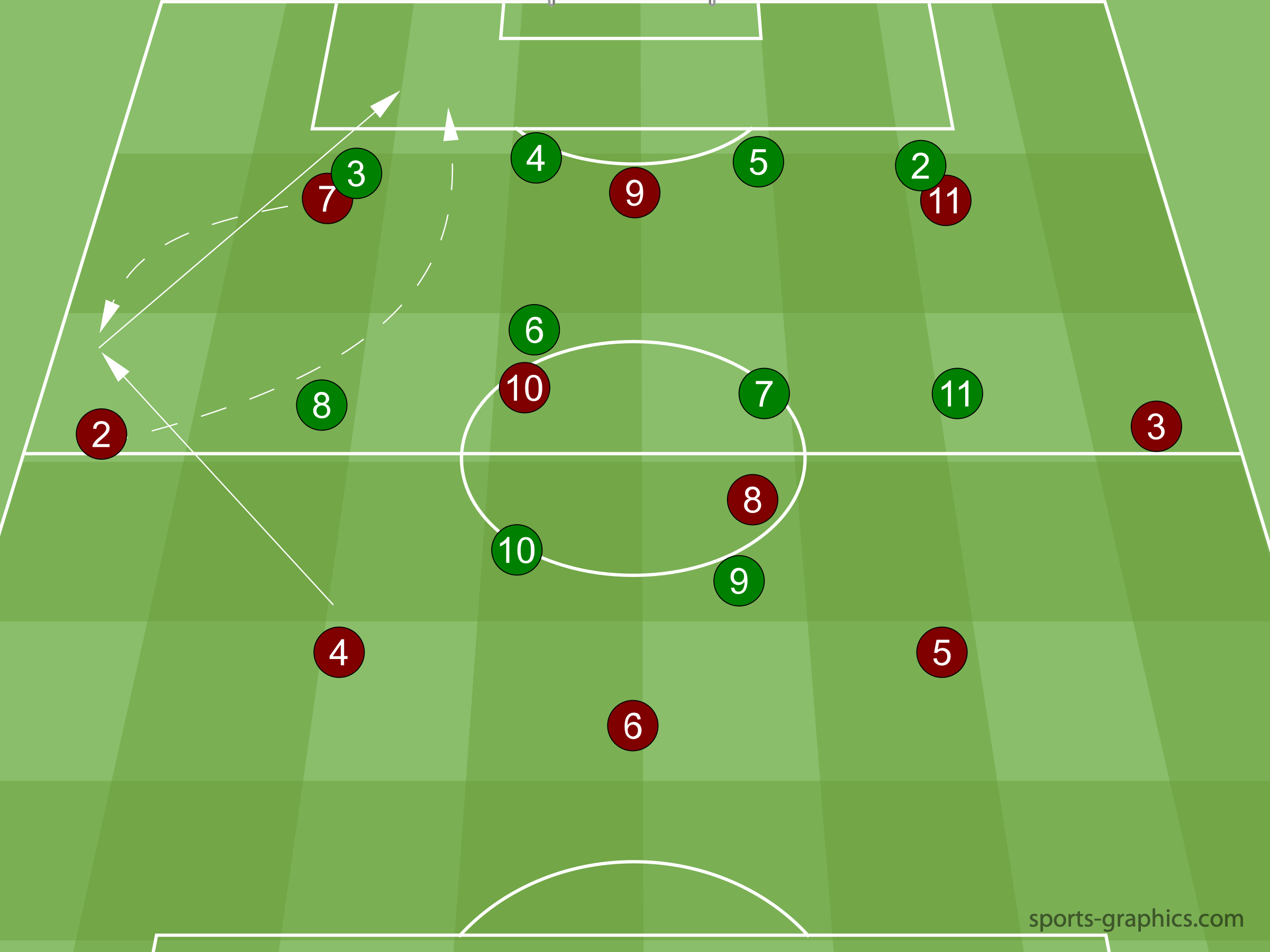
Once the back three is in place and both fullbacks are advanced, the next question is what to actually do with the extra width. One well-known pattern — often called the Alaba solution, after the advancing, underlapping full-back role David Alaba became known for under Pep Guardiola's Bayern Munich — has the ball-side fullback drive into the half-space behind the winger rather than overlapping outside him. The winger holds the touchline; the fullback appears in behind him, in the pocket between the opposition's full-back and center back.
It works because it attacks a space defenders rarely account for. A winger holding the width forces the opposing full-back into a decision — track the run inside, or stay wide — and either choice opens something. If he steps in to cover the underlap, the winger's got the whole touchline to himself. If he stays with the winger, the underlapping run arrives in the box unmarked.
A Concrete Picture: Forming the Three Under Pressure
Here's a simple way to train the whole mechanism together. Set up a possession game where the attacking team starts in its 4-3-3 base shape against an opponent pressing with two strikers and an aggressive midfield line. The moment the ball reaches either center back, the holding midfielder has to recognize the pressing picture and decide, live, whether to drop between the center backs or tuck in beside the near one — not on a coach's call, but based on what the two strikers are actually doing.
Reward the far-side winger and fullback for immediately holding maximum width and depth the instant the three forms, since that spacing is what makes the shape worth building in the first place. If the group defaults to the same solution every time regardless of how the opponent presses, that's the signal to stop and ask why — the whole point of the mechanism is that it adapts to the picture in front of it, not that it's a fixed pattern to memorize.
Why Bother Naming It
You don't need your players to know they're playing a "3-4-3." What matters is that the shift from back four to back three happens on purpose, with everyone knowing their job in both pictures, instead of happening by accident whenever a midfielder gets bored of standing in the middle. Coach the two triggers for forming the three, coach what the fullbacks and wingers do with the width that creates, and the formation label takes care of itself.